Hardwood Flooring Installation in Arkansas: Costs and What Moves Them
Hardwood is still the floor with the best resale return on this list. Before you price a new one, it is worth knowing whether you already own one.
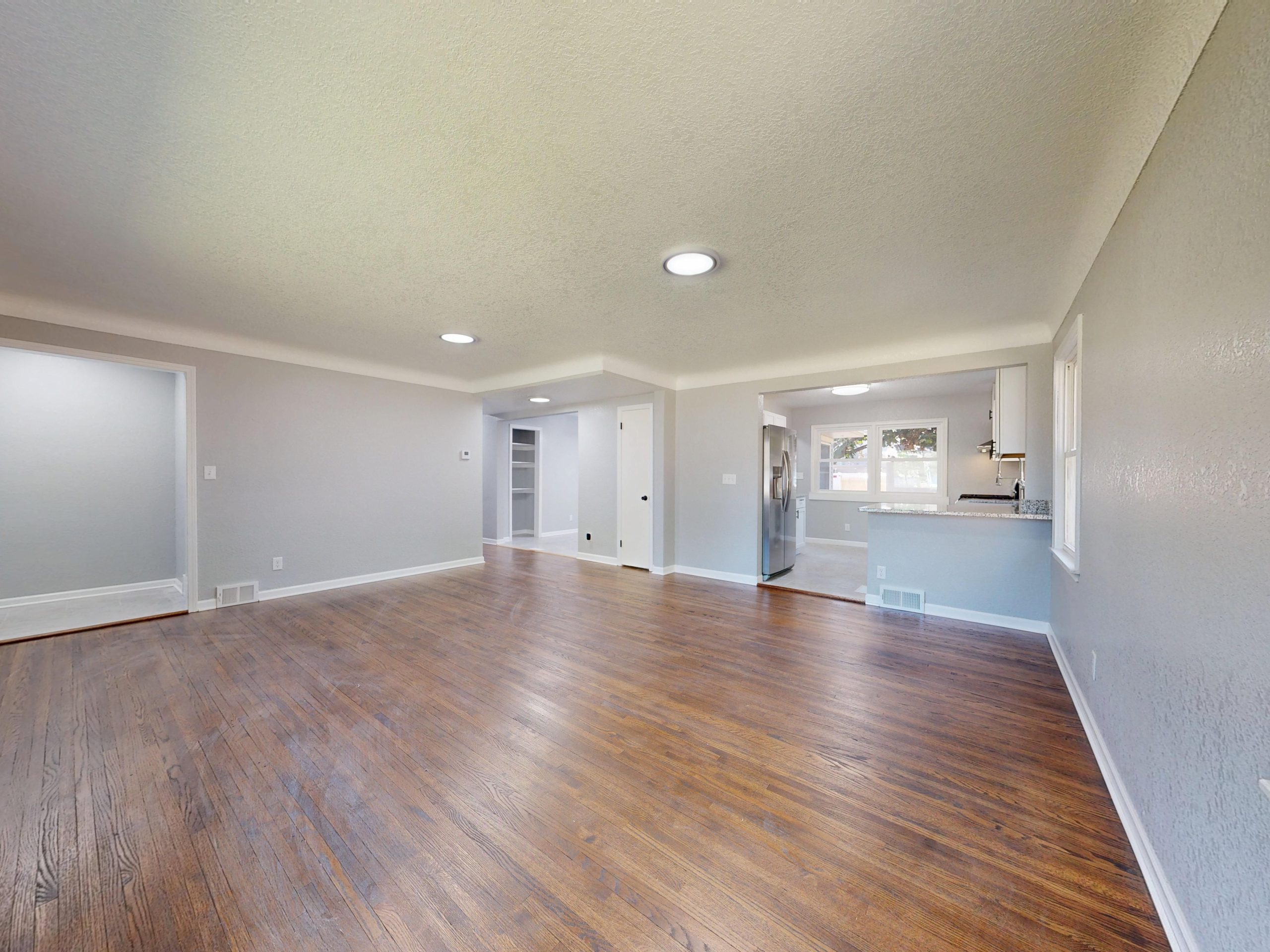
Check for a floor before you buy a floor
Arkansas splits sharply by housing age, and it decides this question. Fort Smith is 14.3% prewar and Pine Bluff 15.6%; Little Rock is 12.8%, concentrated in the Heights, Hillcrest and the Quapaw Quarter. In that housing, original oak under the carpet is a live possibility, and refinishing it runs about a third of the cost of laying new.
In Bentonville, Rogers, Conway or Fayetteville — where between 36% and 69% of the housing has gone up since 2000 — there is almost never anything under the carpet but subfloor. Lifting a corner in a closet takes two minutes and occasionally saves several thousand dollars.
Solid or engineered
Engineered hardwood is a plywood or HDF core with a real wood wear layer. Its cross-laminated core moves less across a humidity swing, and it is the only wood that belongs over a concrete slab. Solid hardwood is the better long-term floor on a wood-framed floor above grade: it sands more times and outlives everything else on this list.
The number that decides how long an engineered floor lasts is the wear layer. A 2 mm layer takes one careful sanding, 6 mm takes two or three, and a thin 0.6 mm veneer takes none at all — which makes it a one-life floor whatever the box says.
What it costs, and which half of that moves
Installed hardwood in Arkansas generally lands between $6 and $22 per square foot, materials and labor together. A mid-grade engineered oak floated over a prepared subfloor sits near the bottom; a wide-plank white oak nailed down, stained and finished on site sits near the top.
Only about half of that figure varies by where you are. Material is a national commodity — a box of the same plank costs about the same in Pine Bluff as in Bentonville. Labor is what moves: Northwest Arkansas has the tightest construction labor market in the state and the Delta the loosest. The estimator on this site applies the regional difference to the labor half only, because inflating the material half would be inventing a number.
An estimate, not a quote. These are planning ranges for Arkansas, not a quote. What you actually pay depends on your rooms, your subfloor and the material you choose.
The lines missing from most quotes
- What happens if the subfloor is damaged. Get a per-sheet rate in writing before anyone starts, not on the morning it is found.
- The cut-and-waste allowance — usually around 10%, more in an irregular room — and whether you are paying for it.
- Removal and disposal of the old floor, which is frequently a separate line.
- Transitions, thresholds and trim, which are small money and the most common thing to be argued about at the end.
Where hardwood is the wrong answer
- Below grade. Solid hardwood does not belong on a slab at any moisture reading.
- Full bathrooms and laundry rooms.
- A rental that turns over every year — and in Fayetteville that is a large share of the housing. Wear layer matters more than species there.
Is refinishing really cheaper than replacing?
Substantially — roughly a third of the cost, and a screen and recoat is a fraction of that again and removes no wood at all. It only applies where there is a sound floor to work with, which in Arkansas means the older housing rather than the new.
Why do two quotes for the same floor differ so much?
Usually preparation. One installer has looked at the subfloor and priced what it needs; the other has quoted the surface and will raise the rest later. Ask both what they found underneath.
What should I ask for in writing?
The exact product and its wear layer, the square footage and the waste allowance, the subfloor terms, and what is included for removal, disposal and thresholds. A contractor who answers those clearly is telling you how the rest of the job will run.