Refinish or Replace: Which One Your Arkansas Floor Needs
Refinishing costs about a third of a new floor and a screen and recoat costs a fraction of that again. The only question is whether there is a floor worth working with — and in half this state there is.
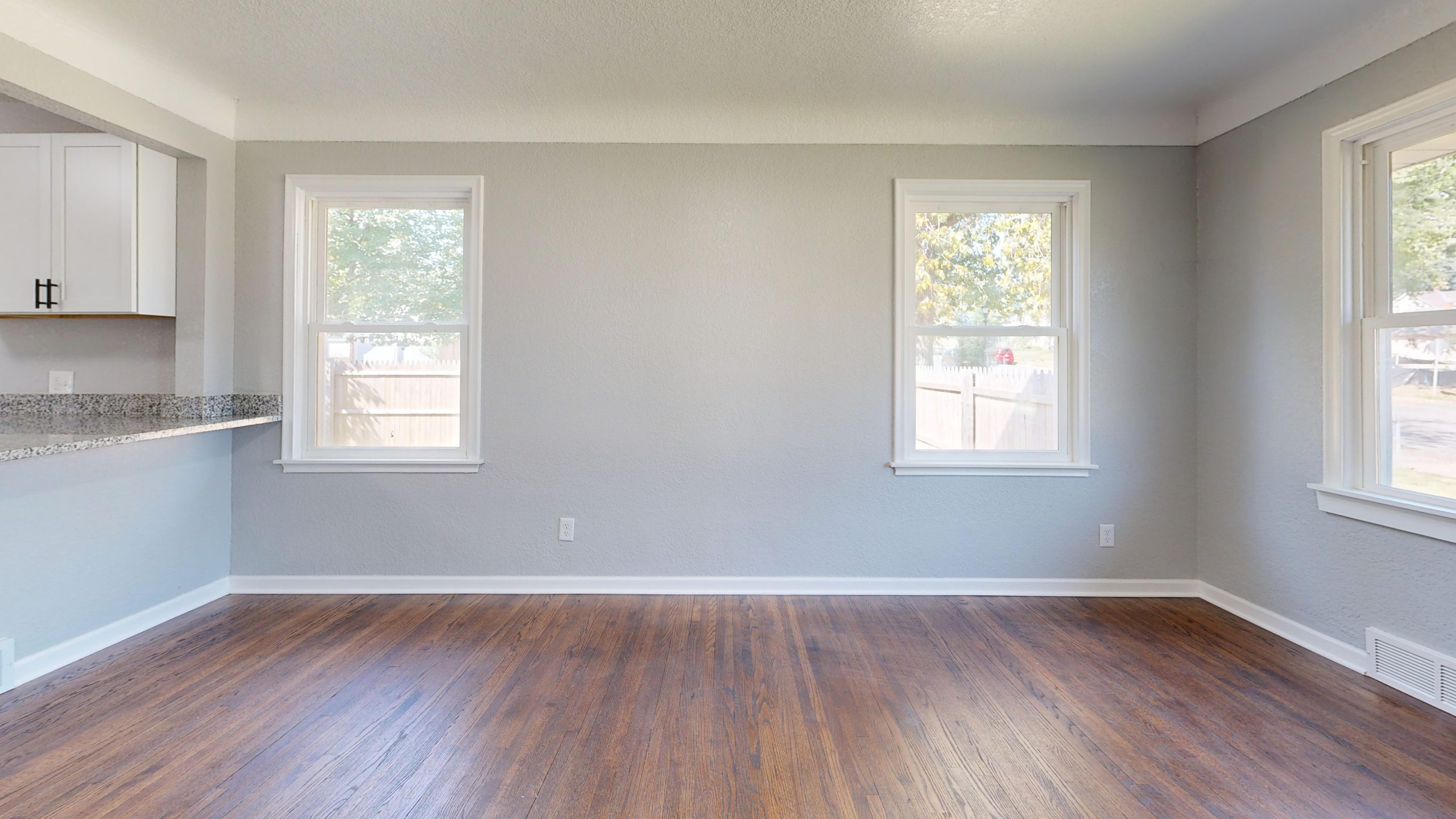
First: is there a floor under the carpet?
It depends almost entirely on when the house was built. Pine Bluff is 15.6% prewar, Fort Smith 14.3%, Little Rock 12.8% concentrated in the Heights, Hillcrest and the Quapaw Quarter, North Little Rock 9.6%. In that housing, original oak under the carpet is a live possibility.
In Bentonville at 1.4% prewar, Springdale at 2.0%, Rogers at 2.6% and Conway at 2.8%, there is essentially nothing under there but subfloor. Statewide, 30.2% of Arkansas housing has gone up since 2000.
Lifting a corner of carpet in a closet takes two minutes and settles it.
Then: three options, not two
- Screen and recoat. The finish is dull and lightly scratched but the wood is not stained or worn through. Abrade the existing finish, lay a new coat, done in a day, no wood removed. The cheapest way to make a whole floor look new, and the option most often skipped.
- Full sand and refinish. Gray or water-stained boards, deep gouges, pet damage that reached the wood, or a change of color. Roughly $3 to $8 per square foot.
- Replace. The floor is past saving, or it is engineered with a wear layer too thin to sand. $6 to $22 per square foot for hardwood.
An estimate, not a quote. These are planning ranges for Arkansas, not a quote. What you actually pay depends on your rooms, your subfloor and the material you choose.
How to tell which
- Water on the finish. If a drop beads, the finish is intact and a recoat will bond — but check that a recoat will actually stick to it, because some factory finishes need abrading first.
- Color of the damage. Surface scratches that do not catch a fingernail are a recoat. Gray or black staining has reached the wood and needs sanding, and black usually means the water got there a long time ago.
- Thickness above the tongue. Measure at a floor vent. A 3/4 in solid floor has four to six sandings in it; a 0.6 mm engineered veneer has none.
- Movement underfoot. Softness is a structural question, not a finish one, and it is worth answering before spending anything on the surface.
When replacing is genuinely right
When the wear layer is gone, when the boards have been sanded to the fasteners, when a large area has been damaged and matching stock cannot be found, or when the room’s use has changed and wood is no longer the right material for it. Those are real reasons. “It looks tired” usually is not.
Common questions
Can a floor be sanded too many times?
Yes — once the sander reaches the fasteners the floor is finished. That is why measuring first matters more than it sounds.
Will refinishing match a floor in the next room?
Rarely exactly. Sanding both together is the reliable answer; sanding one and hoping is not.
Is refinishing worth it before selling?
In older housing, usually — it is one of the few improvements that reads immediately and costs a fraction of replacement.