Stair Treads, Risers and Landings in Arkansas Homes: Costs and Code
Stairs are the most-walked surface in the house and the most expensive square footage in any flooring quote. The per-step price is not padding.
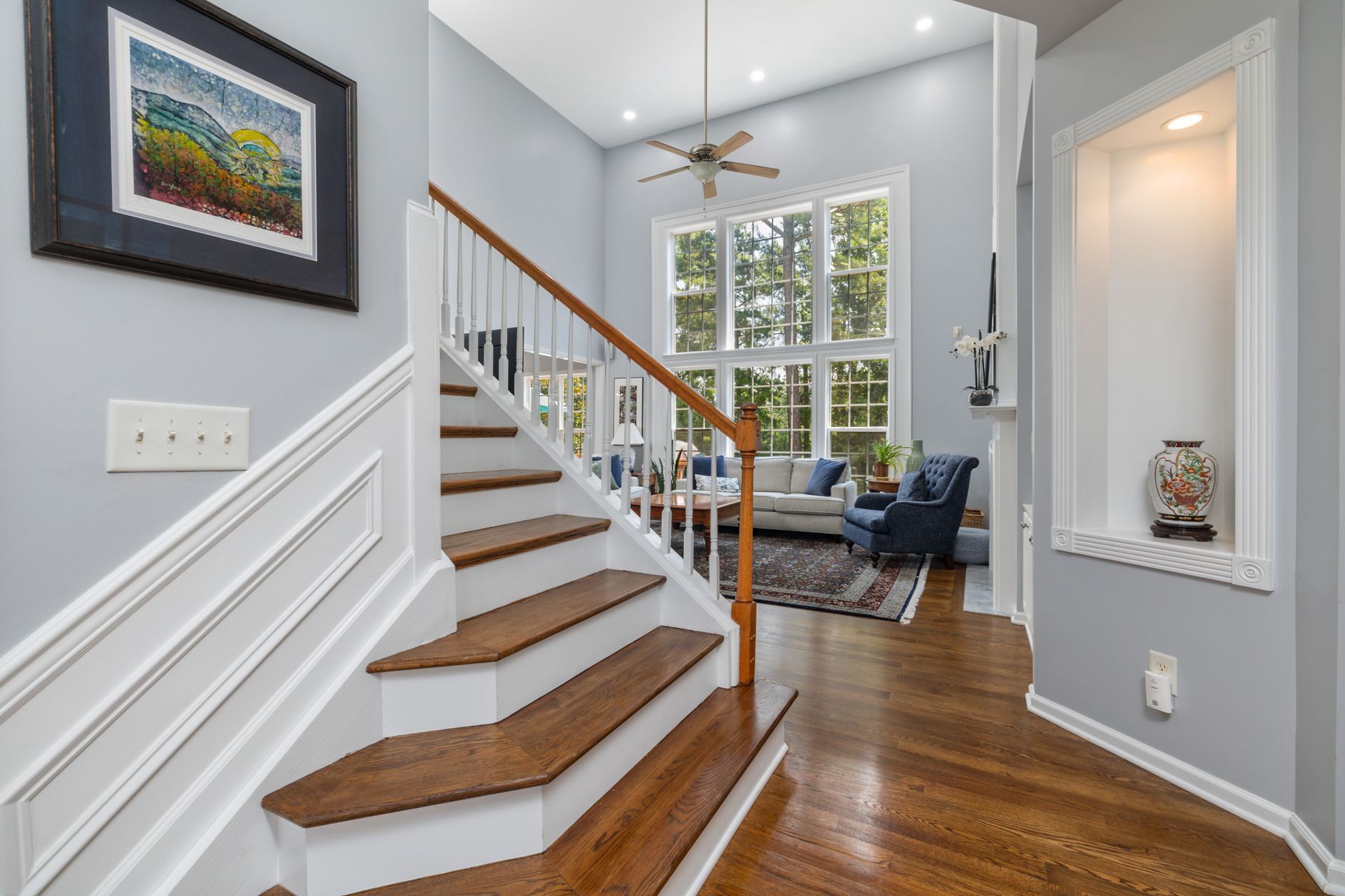
Why stairs are priced per step
A staircase is a series of custom-cut pieces, each scribed to a wall that is not square, with a nosing that has to be routed and returned on the open side. A sixteen-step flight takes as long as a large room and involves more cutting than the rest of the job put together.
Expect a per-step figure rather than a square-foot rate, expect it to look high next to the floors it connects, and expect winders and curved flights to be priced separately — any quote that treats a winder like a straight step has not looked at the stairs.
The measurement that decides everything
The building code allows very little variation between steps in the same flight — the greatest riser height may exceed the smallest by only a small tolerance, and the same applies to tread depth. That constrains what you can do:
- Adding thickness to treads changes riser heights at the top and bottom. Retro- fit tread caps over carpeted stairs are a reasonable product and they raise every tread by their own thickness — fine mid-flight, and a short step at one end unless it is planned for.
- Changing the floor at the top or bottom does the same thing.
- Older flights are frequently already out of tolerance. Measure every riser before ordering anything.
Carpet, wood, or wood with a runner
Carpeted stairs are quieter and more forgiving underfoot and need a firmer pad than the rooms so the nosing holds its shape. Wooden treads are the better long-term surface and are noisier and more slippery. A runner over wooden treads is the arrangement most people actually want: the wood shows at the edges, the runner takes the wear, and it can be replaced without touching the stairs.
Squeaks
A squeak is almost always a tread moving against a riser or a stringer, not the finish. If the underside is accessible the repair is straightforward from below with glue blocks and screws, and it is worth doing before any new surface goes on rather than after.
What it costs
Carpet on a straightforward flight sits at the low end; hardwood treads with returned nosings, matched stain and a rebuilt landing sit at the top. Because stairs are almost entirely labor, this is the line where the regional difference across Arkansas is largest — and where getting two quotes is most worth the time.
An estimate, not a quote. These are planning ranges for Arkansas, not a quote. What you actually pay depends on your rooms, your subfloor and the material you choose.
Can I put hardwood treads over carpeted stairs?
Often, yes — retro-fit caps are made for it. Check what is under the carpet first: many staircases have construction-grade treads that were never meant to be seen, which is fine under a cap and not fine if the plan was to sand and stain them.
Do stairs have to match the floor?
No, and matching exactly is harder than it sounds — tread stock and flooring rarely come from the same run, so a near-match often reads worse than a deliberate contrast.
A tread feels soft. Is that serious?
Worth looking at properly before covering it. Softness is different from a squeak — it means the wood has lost strength, and that is a structural question rather than a flooring one.