Tile and Porcelain Flooring in Arkansas: Costs and Cracked Grout
Tile is the most durable floor you can buy and the least forgiving of what is underneath it. Almost every cracked tile is a structural story rather than a tile story.
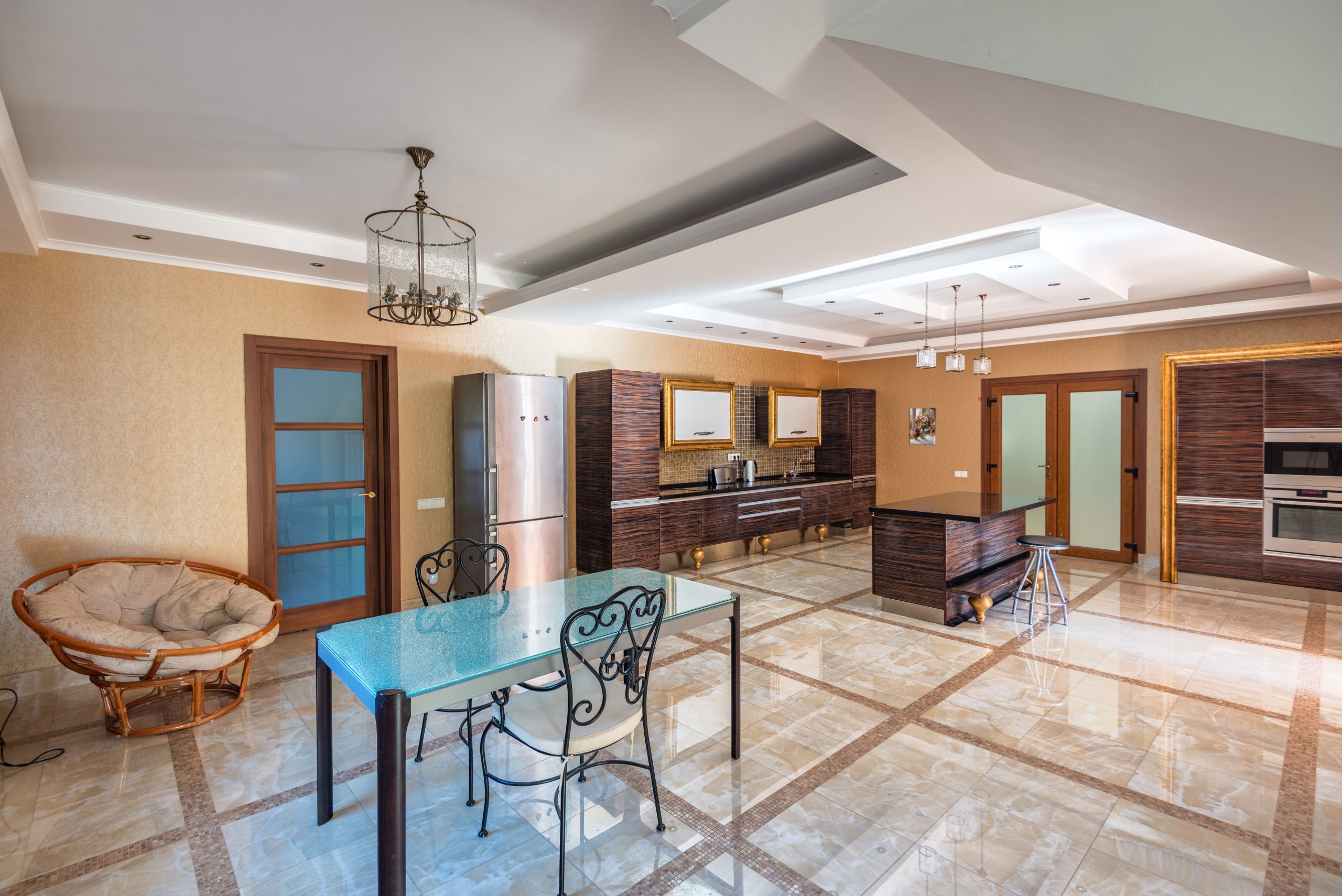
Why tile cracks
Tile does not bend. A wood-framed floor does — under load, and again as framing takes on and gives up moisture through the year. The industry measure is L/360 for ceramic and L/720 for natural stone: the floor must not deflect more than the joist span divided by that number under load.
In older Arkansas housing with long spans, that means the framing needs attention before the tile does. A crack running straight across several tiles is almost always the substrate moving underneath, and replacing the tiles without addressing it guarantees a repeat.
- An uncoupling membrane lets the tile assembly move independently of what is under it. Over a slab it isolates an existing crack; over a wood floor it absorbs ordinary seasonal movement. It does not stiffen a bouncy floor.
- Cement backer board over a properly stiff subfloor is the traditional and still entirely valid approach.
- Directly over old vinyl or a floating floor — no.
Porcelain versus ceramic
Porcelain is fired denser and absorbs under 0.5% water, which makes it harder, heavier and harder to cut. Ceramic is softer, cheaper and easier to work with. Inside a conditioned house both are adequate; porcelain earns its premium on wear — an entry, a kitchen, anywhere a chair is dragged — and anywhere the tile continues outside.
For a wet area the number that matters is the coefficient of friction. A polished porcelain that looks superb in a showroom is genuinely dangerous inside a door in the rain.
Grout, and why it fails first
Cementitious grout is porous and stains; it is also cheap and easy to repair. Epoxy grout is effectively stain-proof, considerably more expensive, and unforgiving to install. For most residential floors a good cementitious grout, sealed, is the right trade.
What is not negotiable is a soft joint — flexible caulk rather than grout — where tile meets a wall, a cabinet or another material. Grout run hard into a corner cracks there first, every time.
What it costs
Installed tile in Arkansas generally runs $9 to $15 per square foot for a straightforward residential floor. Tile is the most labor-intensive material on this site, which means the regional difference shows up more here than anywhere else — and it means pattern work, large format and any structural correction underneath all move the number substantially.
An estimate, not a quote. These are planning ranges for Arkansas, not a quote. What you actually pay depends on your rooms, your subfloor and the material you choose.
Why did my tile crack in a straight line?
The substrate moved. Look at what is below — a joist, a seam in the decking, or a span that deflects — and fix that before replacing anything.
Is large-format tile more expensive to lay?
Yes, because it demands a flatter substrate and shows any deviation. The tile may cost the same per square foot; the preparation does not.
Can tile go over an existing tile floor?
Sometimes, if the existing floor is fully bonded and flat and the height works at doors. It is often a false economy — the old floor’s problems become the new floor’s problems.